

Surface activity is a fundamental concept in the realm of dispersants, and understanding the surface activity of Dispersant MF is crucial for various industrial applications. As a trusted supplier of Dispersant MF, I am delighted to delve into the intricacies of its surface - active properties in this blog post.
Understanding Surface Activity
Before we focus on Dispersant MF, it's important to understand what surface activity means. Surface activity refers to the ability of a substance to reduce the surface tension of a liquid or to change the interfacial properties between two phases, such as a liquid - solid or liquid - liquid interface. Molecules with surface - active properties typically have a hydrophilic (water - loving) part and a hydrophobic (water - hating) part. These molecules tend to accumulate at interfaces, aligning themselves in such a way that the hydrophilic part is in the water phase and the hydrophobic part is in the non - water phase.
The Structure of Dispersant MF and Its Surface - Active Mechanism
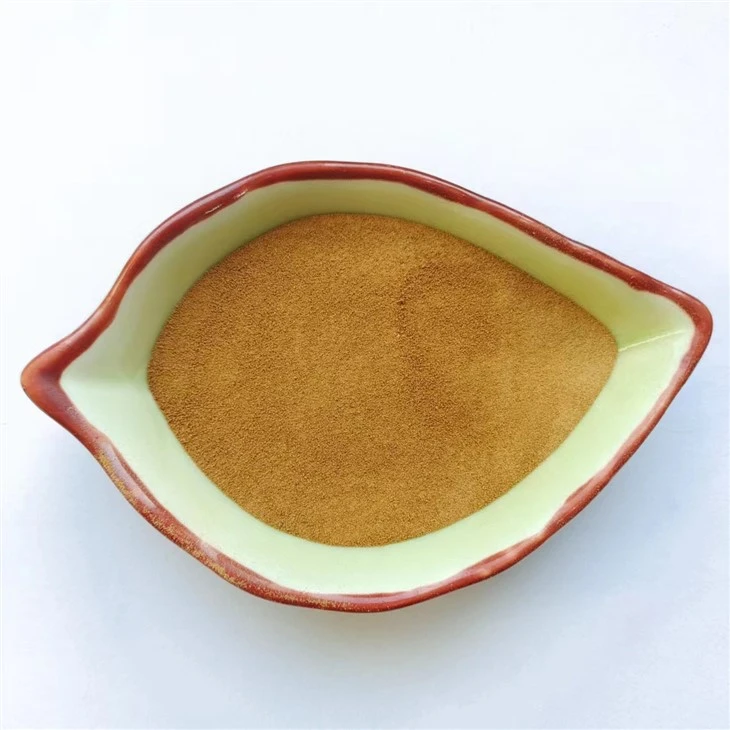
Dispersant MF is a type of sodium salt of methyl naphthalene sulfonate formaldehyde condensate. Its molecular structure consists of multiple sulfonate groups (-SO₃⁻Na⁺) which are hydrophilic, and the naphthalene and methyl groups which are hydrophobic. This amphiphilic structure makes it an effective surface - active agent.
When Dispersant MF is added to a system, the hydrophilic sulfonate groups are oriented towards the water phase, while the hydrophobic naphthalene and methyl groups are oriented towards the non - water phase, such as solid particles. At the solid - liquid interface, the hydrophobic part of the Dispersant MF molecules adsorbs onto the surface of solid particles. This adsorption has two important effects. Firstly, it reduces the surface free energy of the solid particles, making them more stable in the liquid medium. Secondly, it creates a repulsive force between the particles. Electrostatic repulsion occurs because the negatively charged sulfonate groups on the particle surfaces prevent the particles from approaching each other too closely. This repulsive force helps to prevent particle aggregation and sedimentation, thereby keeping the particles well - dispersed in the liquid.
Applications Based on Surface Activity
The surface activity of Dispersant MF finds extensive use in different industries:
Dyeing and Textile Industry
In the textile industry, dyes need to be evenly dispersed in the dyeing bath to achieve uniform coloration of fabrics. Dispersant MF's surface - active properties play a vital role here. It can adsorb onto the dye particles, preventing them from aggregating and ensuring they are uniformly distributed in the dye solution. This leads to better dye uptake by the fabric and more consistent color results. For more information on related textile chemicals, you can refer to our Dispersant Powder SNF Sodium Naphthalene Sulfonate Condensate. Additionally, another useful chemical in the textile industry is Penetrant BX which also relies on its surface - active characteristics to enhance the penetration of various agents into the fabric.
Construction Industry
In the construction field, Dispersant MF is often used as a water - reducing agent in concrete. By adsorbing onto the cement particles, the surface - active Dispersant MF reduces the surface tension between the cement and water. This allows for better dispersion of the cement particles in the water, reducing the amount of water required to achieve a certain workability. As a result, the strength and durability of the concrete can be improved.
Pigment Industry
In the production of pigments, it is essential to have well - dispersed pigment particles. Dispersant MF can effectively disperse pigments in various mediums such as paints, inks, and coatings. The surface - active nature of Dispersant MF helps to reduce the agglomeration of pigment particles, improving the color intensity, gloss, and stability of the final products.
Factors Affecting the Surface Activity of Dispersant MF
Several factors can influence the surface activity of Dispersant MF:
Concentration
The concentration of Dispersant MF in the system is a critical factor. At low concentrations, there may not be enough Dispersant MF molecules to fully cover the surfaces of the particles, resulting in insufficient dispersion. As the concentration increases, the surface activity becomes more pronounced until a saturation point is reached. Beyond this point, further increasing the concentration may not bring additional benefits and could even cause negative effects such as increased viscosity.

Temperature
Temperature can also impact the surface activity of Dispersant MF. Generally, an increase in temperature can enhance the kinetic energy of the molecules, promoting their movement and adsorption onto the particle surfaces. However, if the temperature is too high, it may cause the decomposition of some groups in the Dispersant MF molecule, leading to a decrease in surface activity.
pH Value
The pH value of the system can affect the ionization state of the sulfonate groups in Dispersant MF. In an appropriate pH range, the sulfonate groups are fully ionized, which is beneficial for electrostatic repulsion. Significant deviations from this optimal pH range can reduce the surface activity and dispersion performance of Dispersant MF.
Comparison with Other Dispersants
When compared with other dispersants, Dispersant MF has unique advantages in terms of surface activity. For example, compared to some simple ionic dispersants, the complex structure of Dispersant MF provides stronger adsorption on particle surfaces and better steric hindrance effects. Another popular dispersant is the Sodium Salt Of Polynaphthalene Sulphonate Dispersant NNO CAS NO 36290 - 04 - 7. While both Dispersant MF and Dispersant NNO are based on naphthalene sulfonate condensates, they have different molecular architectures which result in different surface - active properties and application performance.
Quality Control of Surface Activity
As a reliable supplier of Dispersant MF, we implement strict quality control measures to ensure the consistency of its surface activity. Our production process is carefully monitored to maintain the correct molecular structure and composition of Dispersant MF. We conduct a series of tests, including surface tension measurement, particle size analysis of dispersed systems, and stability testing under different conditions. These tests help us to evaluate the surface activity of Dispersant MF and guarantee that it meets the high - quality standards required by our customers.
Conclusion
The surface activity of Dispersant MF is a key characteristic that enables its wide - ranging applications in multiple industries. Through its unique amphiphilic structure, Dispersant MF can effectively reduce surface tension, prevent particle aggregation, and improve the stability of various systems. As a professional supplier, we are committed to providing high - quality Dispersant MF with excellent surface - active properties.
If you are interested in purchasing Dispersant MF or have any questions about its applications, please feel free to contact us. We are more than willing to have in - depth discussions with you and provide the best solutions for your specific needs.
References
- Rosen, M. J. (2004). Surfactants and Interfacial Phenomena. John Wiley & Sons.
- Lin, Y., & Somasundaran, P. (2012). Adsorption and surface - related phenomena in mineral and materials processing. Springer.
- Textbook on Textile Chemical Processing, various editions for textile - related applications of dispersants.