
As a seasoned leather chemicals supplier, I've witnessed firsthand the crucial role additives play in the leather - making industry. Leather chemicals constitute a wide range of products used in different stages of leather processing, from tanning to finishing. Additives are essential components that enhance the performance, quality, and appearance of leather. In this blog, I'll delve into some of the common additives in leather chemicals.
1. Dispersing Agents
Dispersing agents are one of the most important additives in leather chemicals. Their primary function is to break down and disperse particles evenly in a liquid medium. In leather processing, they help in the uniform distribution of dyes, pigments, and other substances in the leather treatment baths.
One well - known dispersing agent is the Sodium Salt Of Polynaphthalene Sulphonic Acid. This compound has excellent dispersing properties, which allows it to prevent the aggregation of particles. It is particularly useful in the dyeing and filling processes of leather. In dyeing, it ensures that the color is evenly absorbed by the leather fibers, resulting in a more consistent and vibrant color. In the filling process, it helps to evenly distribute fillers within the leather, improving the fullness and smoothness of the leather surface.
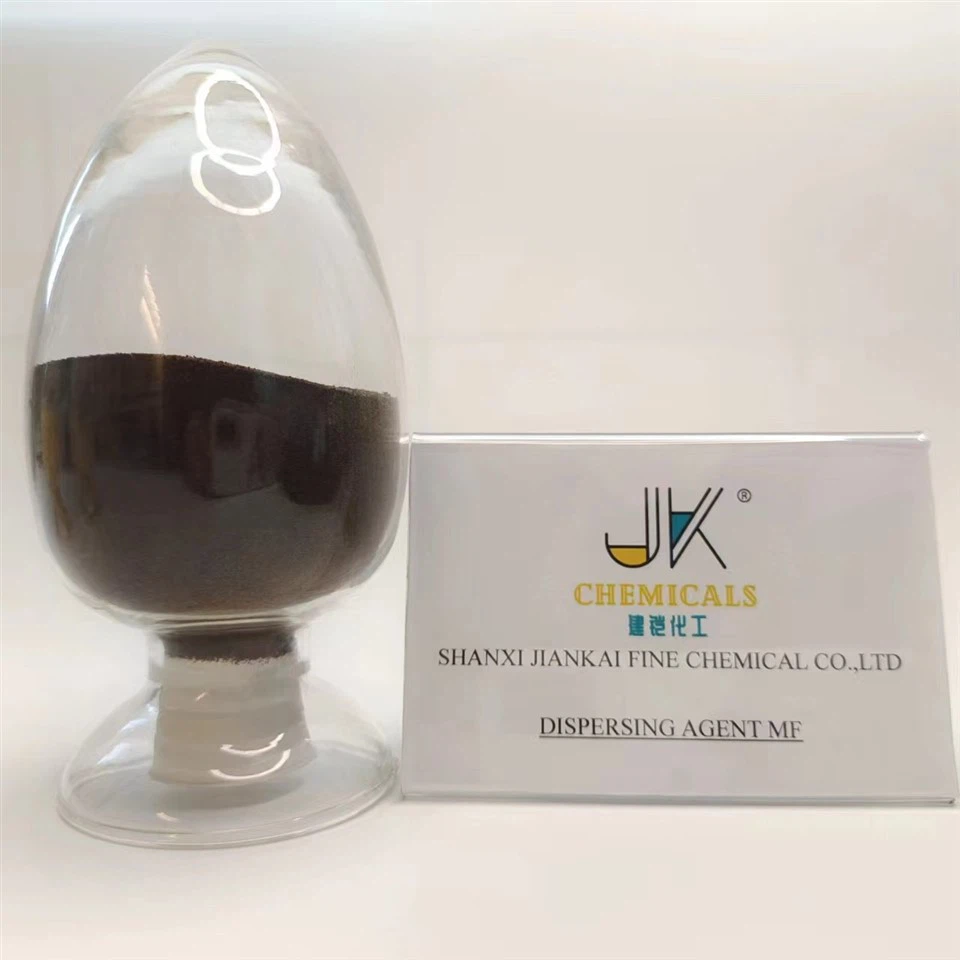
Another significant dispersing agent is the JK - MF - A Dispersing Agent MF CAS NO. 9084 - 06 - 4. It has a high tolerance to electrolytes and can work effectively in different pH ranges. This makes it suitable for a variety of leather processing conditions. It can improve the stability of the dispersion system, reducing the occurrence of sedimentation and flocculation. This helps in achieving a more uniform and high - quality leather product.
2. Retanning Agents
Retanning agents are used in the intermediate stage of leather processing to further improve the properties of the tanned leather. They help to increase the fullness, firmness, and softness of the leather according to different requirements.
Vegetable - based retanning agents are very popular. Extracts from plants like mimosa, quebracho, and chestnut are rich in tannins. These natural tannins can penetrate the leather fibers, forming cross - links and enhancing the leather's strength. They also contribute to a more natural and eco - friendly look of the leather.
Synthetic retanning agents, on the other hand, offer more precise control over leather properties. They can be customized to achieve specific softness, firmness, or color characteristics. For example, some synthetic retanning agents can be designed to improve the water resistance of leather, which is crucial for products like outdoor footwear.
3. Fatliquoring Agents
Fatliquoring is a vital step in leather processing that adds lubrication and flexibility to the leather. Fatliquoring agents are used to introduce natural or synthetic fats and oils into the leather structure.

Natural fatliquoring agents typically include fish oil, neatsfoot oil, and lanolin. Fish oil is rich in unsaturated fatty acids, which can penetrate deeply into the leather fibers, making the leather soft and pliable. Neatsfoot oil has good lubricating properties and can enhance the leather's natural sheen. Lanolin, on the other hand, is gentle on the leather and can help to maintain its moisture, preventing dryness and cracking.
Synthetic fatliquoring agents are also widely used because of their consistent quality and performance. They can be formulated to resist oxidation, hydrolysis, and microbial attack, ensuring the long - term durability of the leather.
4. Dyes and Pigments
Dyes and pigments are responsible for giving leather its desired color. Dyes are soluble in the medium and can penetrate the leather fibers, resulting in a more homogeneous color. Pigments, on the other hand, are insoluble particles that are adhered to the leather surface.
Acid dyes are commonly used in the leather industry because they have good affinity for leather proteins. They can provide a wide range of bright and vivid colors. However, they may have some limitations in terms of light fastness and water resistance.
For better color fastness, reactive dyes are often preferred. Reactive dyes can form covalent bonds with the leather fibers, which significantly enhances the color's resistance to washing, rubbing, and light exposure.
Pigments are used when a more opaque or a special effect color is required. They are often used in the finishing stage to create unique looks such as metallic or pearlescent effects.
5. Water - repellent Agents
Water - repellent agents are essential additives, especially for leather products that are likely to come into contact with water, such as outdoor clothing, shoes, and bags.
Silicone - based water - repellent agents are very effective. They form a thin, hydrophobic film on the leather surface. This film prevents water from penetrating the leather while still allowing the leather to breathe. Silicone water - repellents also have good weather resistance and can maintain their performance over a long period.
Fluorocarbon - based water - repellent agents are another option. They offer excellent water and oil repellency. Fluorocarbons can reduce the surface tension of the leather, making it difficult for water and oil droplets to adhere to the surface.
6. Antioxidants
Antioxidants are used to protect the leather from oxidation, which can cause discoloration, hardening, and brittleness over time. Oxidation can be accelerated by factors such as heat, light, and air.
Phenolic antioxidants are commonly used in leather chemicals. They work by inhibiting the free - radical reactions that occur during oxidation. By scavenging free radicals, phenolic antioxidants can extend the lifespan of the leather and maintain its original appearance and properties.
Amine - based antioxidants are also effective. They are often used in combination with phenolic antioxidants to provide a more comprehensive antioxidant protection system.
7. Preservatives
Preservatives are added to leather chemicals to prevent the growth of microorganisms such as bacteria, fungi, and mold. Microbial growth can cause unpleasant odors, discoloration, and deterioration of the leather.
Organic - based preservatives are widely used. They can be incorporated into the leather treatment baths or applied as a surface treatment. They work by disrupting the metabolic processes of microorganisms, inhibiting their growth and reproduction.
Some inorganic preservatives, such as salts of heavy metals (although their use is becoming more restricted due to environmental concerns), can also provide effective antimicrobial protection.
Contact for Purchase and Discussion
These additives are just a part of the diverse range of products we offer as a leather chemicals supplier. Each additive plays a unique and important role in improving the quality and performance of leather. If you're in the leather - making industry and are interested in these additives or have specific requirements for your leather processing, don't hesitate to contact us. We're here to provide you with high - quality products and professional advice to meet your needs.
References
- "Leather Science and Technology Handbook"
- "Advances in Leather Chemistry"
- Industry reports on leather chemicals and additives