

Preparation and Application of dispersant NNO
The preparation process of dispersant NNO
The dispersant NNO is prepared by sulfonating naphthalene at a high temperature of 150℃ to 170℃ with concentrated sulfuric acid, then conducting a condensation reaction with formaldehyde under a certain pressure at 110℃ to 130℃ to generate a certain molecular weight of methylene diphenylsulfonic acid. This is then neutralized with sodium hydroxide to obtain methylene diphenylsulfonic acid sodium. Finally, it is filtered, dried, and processed to obtain the finished product Dispersant NNO. The reaction equation is:
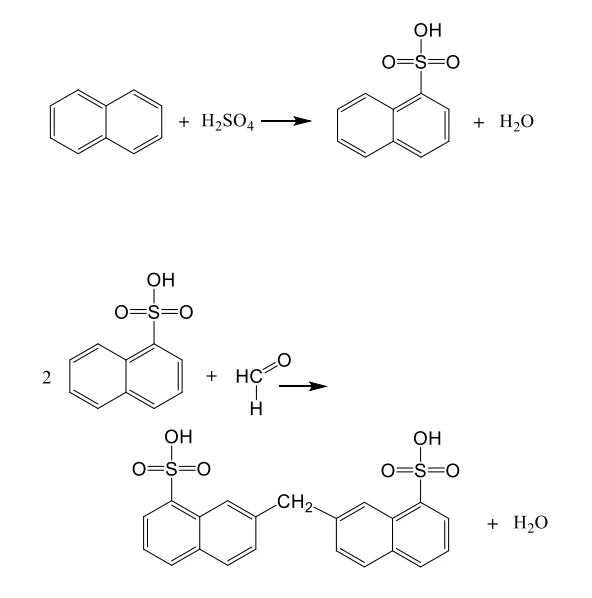
Throughout the entire preparation process, the sulfonation reaction is crucial. A high sulfonation conversion rate directly affects the yield of the product and the quality of the final product Dispersant NNO.
The temperature and pressure of the condensation reaction determine the proportion of the condensation product, which directly affects the diffusion rate, dispersibility and heat resistance stability of the product Dispersant NNO. Therefore, during the preparation process, the degree of sulfonation must be detected and controlled, and the temperature and pressure of the condensation reaction must be kept within an appropriate range.
the applications of dispersant NNO
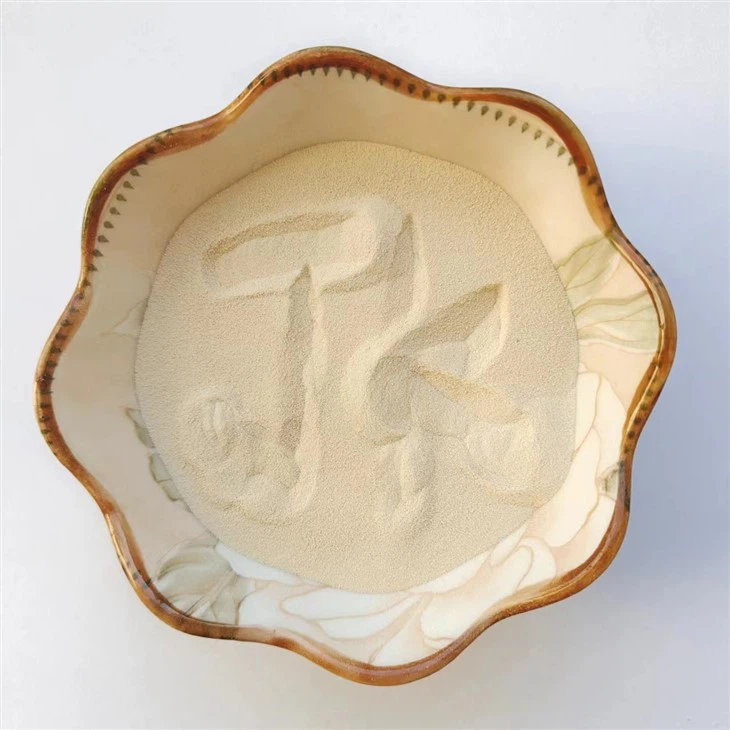
The appearance of dispersant NNO is a light yellow powder. It is soluble in water. The 1% aqueous solution has a pH value ranging from 7.0 to 9.0. It can resist acids, alkalis, inorganic salts, and hard water. Due to the excellent dispersing and leveling properties of dispersant N, and the fact that it does not produce foam during use, it is often used as a dispersing and leveling agent in printing and dyeing processes. Dispersant NNO increases the dispersion speed of dyes, slows down the dyeing speed, and achieves thorough leveling and uniform dyeing.

(1) Currently, when dyeing with disperse dyes, since most of the dyeing is carried out under a small bath ratio, the dyes tend to aggregate and are difficult to disperse, which can easily lead to phenomena such as color spots, color patches, and color differences. Therefore, adding the dispersant NNO can overcome these problems and achieve a better uniformity in dyeing.
(2) When using reducing dyes for dyeing, due to the fast coloring and slow diffusion characteristics of reducing dyes, when dyeing in a concentrated electrolyte solution, it is difficult to achieve uniform dyeing and prone to color bleeding and white core formation. Adding a dispersant of 2.0 to 3.0 g/L can help with the diffusion and stability of the dye particles. For indigo-based reducing dyes used in masked dyeing, the amount of dispersant NNO can be reduced to 0.5 to 1.5 g/L.
(3) When dyeing a silk and wool blend with acidic dyes, adding the dispersant NNO can prevent the acidic dyes from adhering to the silk.
(4) When dyeing polyester, acetate fiber and other wool-blended fabrics with disperse dyes, adding the dispersant N can prevent the wool from getting stained.
(5) Construction industry: The dispersant NNO can be used as a water-reducing and early-strength agent for cement, enhancing the strength of the cement; it can also improve the tensile, impermeability, frost resistance and compressive elastic modulus of concrete.
(6) Pesticide industry: The dispersant NNO can be widely used as an additive for wettable powder pesticides. It has excellent dispersing and solubilizing effects, significantly enhancing the efficacy of the pesticides.
inquiry of dispersant NNO
For Dispersant NNO, we Shanxi Jiankai Fine Chemicals Co.,Ltd developed one series products, according to different Na2SO4 content, we have types of less than 3%, 15% and 22% for your choice. For package, we have 25kg kraft paper bag, 650kg jumbo bag for your choice.


Hotline: 0086-6364858
Mobile: 0086-19335942828(WeChat, WhatsApp)
Email: info@sxjkchemicals.com
