
Why Choose Us
Production Ability
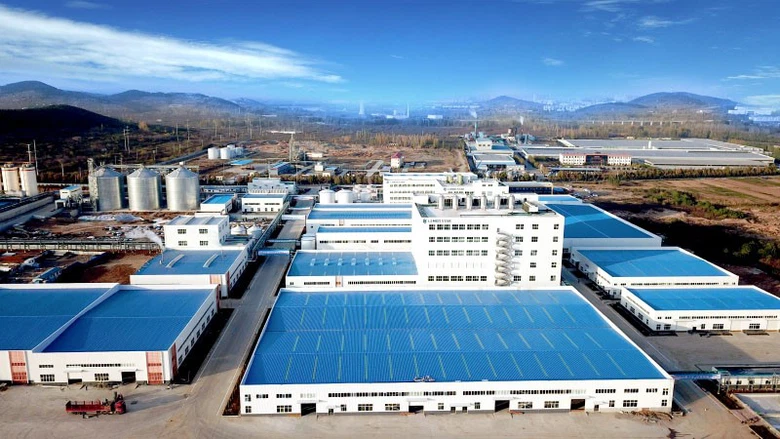
The company has three own cooperative factories, total 20 production lines. To supply stable and excellent products to customers.
Customized Service
"Customized production" consept is initially posted and implemented, which is to satisfy customer's needs more well from different industries.
Technology Innovation
JIANKAI Chemical constantly develops more and more new additives through the positive cooperation with famous laboratories and other enterprises.
Excellent Technology
Always adhere to adopting our own proprietary technology in core technology.
After-sale Service
We have a complete after-sales service system, so you can purchase with confidence.
Quality Control
From raw materials incoming, products manufacturing till finished products inspection and output, strict control measures is taken in every segments.
Sodium gluconate is a versatile compound with various applications in industries such as food, pharmaceuticals, and construction. It is the sodium salt of gluconic acid, produced through the fermentation of glucose. Sodium gluconate is widely used as a chelating agent, water quality enhancer, and pH regulator. It acts as a sequestrant, helping to bind and control metal ions in food and beverage formulations. In the construction industry, it is employed as a concrete admixture to improve the workability and strength of concrete. With its multifunctional properties, sodium gluconate plays a vital role in different sectors, contributing to the quality and performance of various products and processes.
Related Product

Polycarboxylic Acid Superplasticizer PCE Liquid
Polycarboxylic Acid Superplasticizer PCE is a high-performance concrete water reducing agent mainly composed of polyethers and polyesters. The use of this product can significantly reduce the water cement ratio and improve the working performance of concrete. It has the characteristics of low dosage, high water reduction rate, good adaptability to cement, and green environmental protection. It is suitable for high-strength concrete, high-performance concrete, underwater pouring concrete, self compacting concrete, flow concrete, large admixture concrete, and various grouting self leveling mortar materials.

Polycarboxylate Superplasticizer Liquid For Slump Retention Type
JK-PL-SR Polycarboxylate Superplasticizer Liquid for Slump Retention Type is polycarboxylate ether based high performance copolymer designed for highest concrete quality. It enables concrete to be produced highly workable at low dosage with improved slump retention. It has very good slump retention and adaptability to different cement and materials, especially for summer high temperature construction conditions and long-distance concrete transport project.
JK-PL-SR is a neutral concentrate grade, it is mainly used as a raw material together with JK-PL-WR to produce different types of high performance water reducers for targeted industrial. It complies with ASTM C 494, Type F specifications.

Sodium Polynaphthalene Sulfonate
Sodium Polynaphthalene Sulfonate(PNS) is a sodium salt of the product obtained by the condensation polymerization of naphthalene sulfonic acid and formaldehyde. It is non-air entraining superplasticizer. It has good dispersing performance on the cement particles. Compared with traditional plasticizer, it has higher water reducing rate, good performance for high flowing concrete, case-in-place concrete which require for early and high strength, precast concrete and parts etc. It also has good adaptability to common cement, widely use in roads, bridges, dams, power engineering, civil construction and others.

SNF High Range Water Reducing Concrete Admixture
Naphthalene-based High Range Water Reducing Concrete Admixture is a powder admixture based on naphthalene powder associated with chemical synthesis products. It can improve the early and final strengths of concrete by giving rheoplastic property. It is specifically formulated to meet the needs of the concrete industry. It can greatly improve the workability of concrete, thereby reducing the water consumption for mixing, and can significantly increase the strength of concrete.

Polycarboxylate-Based Superplasticizer Liquid
Polycarboxylate-based Superplasticizer Liquid is the third generation of high performance superplasticizer which is beneficial to improve the workability of concrete admixture, reduce bleeding, and improve the appearance quality and durability of concrete. It is composed of an aqueous copolymer of polycarboxylic acids. When added to concrete, it reduces bleeding and material separation, allowing for a significant reduction in water content by at least 25%.

Sulfonated Melamine Formaldehyde
Sulfonated Melamine Formaldehyde(SMF) is a superplasticizer powder based on Sulfonated melamine formaldehyde condensates.It is a polymer used in cements and plaster based formulations to reduce water content, while increasing the fluidity and the workability of the mix. In concretes, addition of SMF in an appropriate mix design results in lower porosity, higher mechanical strength, and an improved resistance to aggressive environments.
Sulfonated Melamine Formaldehyde(SMF) is an non-air entraining product, it has strong adsorption and dispersion effect for cement, helping mortar achieve a perfect finishing smooth surface.

Polycarboxylate Ester Superplasticizer Powder
JK-PPZ Polycarboxylate Ester Superplasticizer Powder is polycarboxylate ester based high performance copolymer powder designed for highest concrete quality. It is a powder form Supperplasticizer for cement, mortar and concrete products no matter the products are made from Portland Cement (or other siliceous cement such as slag cement, fly ash cement, etc. or high alumina cement. It is widely used in various grouts, self-leveling screeds, floor screeds, high performance concrete, ultra-high-performance concrete, pumpable concrete, etc.
JK-PPZ Polycarboxylate Ester Superplasticizer Powder is a neutral concentrate grade, it is mainly used as a mother material together with other functional admixtures to produce different types of high performance water reducers for targeted industrial. It complies with ASTM C 494, Type F specifications.

Naphthalene-Based Superplasticizer
Naphthalene-based Superplasticizer has a high water-reducing rate, good fluidity, slight slump loss over time, and no segregation or bleeding. Meanwhile, it can significantly improve the fluidity and strength of concrete at all ages, especially the later potency, which has a significant enhancement effect. It is the first choice for admixture for high-strength concrete, commercial concrete, earthquake-proof concrete, self-leveling grouting materials, and other products.
Naphthalene-based Superplasticizer is mainly used for formulating concrete super plasticizer, high-strength concrete, steel concrete, prestressed concrete, large formwork concrete, slip forming concrete etc, as a water reducing agent. Compatible with all types of Portland Cement.

Sulfonated Naphthalene Formaldehyde
Sulfonated Naphthalene Formaldehyde(SNF) is a condensed polymer product. It is mainly used as powerful water reducing agent in concrete and also known as superplasticizer. It produces concrete with exceptionally workable characteristic referred to as high slump. It helps to keep the minimum water to cement ratio without compromising the degree of workability. It is also a very good dispersing agent.
Sulfonated Naphthalene Formaldehyde(SNF) is a high range water reducer, commonly referred to as a superplasticizer, also named Naphthalene Sulfonate Formaldehyde Condensate, NSF, SNF, PNS, FDN, etc.
Sulfonated Naphthalene Formaldehyde(SNF) is made of naphthalene, sulfonic acid, formaldehyde and alkali, through sulphuration, hydrolyzation, condensation and neutralization reaction. It contains no chloride. Thus, it meets the requirements of chemical admixture specifications for concrete: ASTM C 494, Type F; ASTM C 1017, GB8076-1997 and GB50119-2003.
Advantages of Sodium Gluconate
Chelating Properties: Sodium gluconate exhibits excellent chelating properties, effectively binding to metal ions and preventing their negative impact on food, cleaning products, and concrete mixes. It enhances product stability, improves performance, and prevents mineral deposits.
Environmental Friendliness: Sodium gluconate is non-toxic and environmentally friendly. It is biodegradable and does not pose significant environmental risks, making it a sustainable choice for various applications.
Improved Product Performance: In food, cleaning, and concrete applications, sodium gluconate enhances product performance by improving texture, preventing mineral buildup, and increasing workability.
PH Regulation and Stability: Sodium gluconate acts as a pH regulator, ensuring the desired acidity or alkalinity in formulations. It helps maintain product stability and extends shelf life.
The Main Uses Of Sodium Gluconate
Retarder agent for concrete
Sodium gluconate is used to improve the strength and workability of concrete and is also used as a retarder for concrete across many of the construction sectors. Adding specific amounts of this additive to cement prolongs the curing and starting time of concrete or cement, which means it delays the final and initial setting time of the concrete without impacting the strength. Sodium Gluconate can also prolong the "working time" of cement or concrete. It is usually used in combination with some concrete water reducer.
Steel surface cleaning agent
When it comes to specialized applications where the steel surface has to be cleaned stringently to ensure the cladding materials bond tightly to the surface of the steel sodium gluconate can be used as an effective cleaning agent for cleaning the steel's surface due to its effective cleaning effect.
Water-quality stabilizer
Sodium Gluconate is also used widely as one of the water stabilizers in low-pressure boilers, and cooling-water systems, among other fields. Of course, phosphates products(such as shmp chemical, stpp) are still one of the commonly used descaling agents for boiler water treatment. In comparison to general corrosion inhibitors, as the temperature increases so do its corrosion-inhibition abilities.
Textile industry
Sodium Gluconate is also commonly used for degreasing and fiber cleaning. It can improve the bleaching effects relating to certain bleaching powders and the uniformity of color in dyes and improve the dyeing hardening degree of raw materials in the textile industry.
Glass bottle cleaning agent
Sodium Gluconate can also be used to effectively remove the rust that accumulates around the mouth of bottles and to remove the labels on the outside of bottles. It also decreases the likelihood of the washer nozzle or the pipeline plugging. It is essential that it doesn't affect environmental safety or food.
The petroleum industry
Sodium Gluconate is also a common agent used in the production processes of oil-field drilling fields along with petroleum products.
Applications of Sodium Gluconate
Food and Beverage Industry
Sodium gluconate is commonly used in the food and beverage industry as a sequestrant, stabilizer, and pH regulator. It acts as a chelating agent, binding to metal ions and preventing their adverse effects on food quality and stability. Sodium gluconate also helps enhance the flavor and texture of certain food products.
Cleaning and Household Products
Sodium gluconate is a key ingredient in cleaning and household products. It serves as a chelating agent, effectively removing and preventing the buildup of mineral deposits in cleaning formulations, such as detergents and dishwashing liquids. It also aids in the removal of rust and other stains from various surfaces.


Construction and Concrete Industry
Sodium gluconate is utilized in the construction and concrete industry as a concrete admixture. It acts as a water reducer, improving workability and flowability of concrete mixes. Sodium gluconate also retards the setting time of concrete, allowing for better concrete placement and finishing.
Pharmaceutical and Personal Care Products
Sodium gluconate finds applications in the pharmaceutical and personal care industries. It serves as a chelating agent in medications, helping to stabilize and enhance the effectiveness of certain drugs. In personal care products, it acts as a pH adjuster and helps improve the stability and shelf life of formulations.
By adding a water reducing agent to reduce the ratio of water to cement (W / C), the industrial grade of sodium gluconate can be lowered. By adding sodium gluconate, the following effects can be obtained:
Improved processability When the water to cement ratio (W / C) is constant, the addition of sodium gluconate improves processability. At this time, sodium gluconate functions as a plasticizer. When the amount of sodium gluconate is less than 0.1%, the degree of improvement in workability is proportional to the amount added.
Increase the strength When the cement content remains unchanged, the water content in the concrete can be reduced (ie, W / C is reduced). When the amount of sodium gluconate added is 0.1%, the amount of water added can be reduced by 10%.
Reduce cement content Water and cement content are reduced in the same proportion, and the W / C ratio remains unchanged. At this time, sodium gluconate is used as a cement reducing agent. In general, the following two aspects are important for the performance of concrete: shrinkage and heat.
In the food industry, sodium gluconate is used mainly as a sequestrant, stabiliser, thickener, and buffer. It acts as a sequestrant to sequester metal ions, which helps prevent them from reacting with other ingredients.
As a buffer, sodium gluconate helps maintain a consistent pH level in food products. It also acts as a thickener and stabiliser when used as a food additive. In addition, it can be used as a preservative to prevent discolouration and spoilage.

Storage of Sodium Gluconate
Storage environment of sodium gluconate
• Temperature: The storage temperature of sodium gluconate should be controlled between 15-30 degrees Celsius.
• Humidity: The storage environment should be dry and avoid moisture.
• Anti-exposure: Sodium Gluconate should be stored in a place protected from light, dry and ventilated, avoiding direct sunlight and high temperature exposure.
Precautions
• Storage time: The shelf life of sodium gluconate is three years, the storage time should not exceed the shelf life.
• Fire and explosion prevention: Sodium gluconate belongs to flammable products, store it away from fire source to prevent fire or explosion.
• Anti-theft and anti-mistake: The storage place should be equipped with anti-theft door locks, and unauthorized personnel are prohibited from contacting sodium gluconate. In addition, the storage place should be categorized and placed to avoid mixing with other items.
• Anti-vibration and anti-pressure: Sodium gluconate should be anti-vibration and anti-pressure during storage and transportation to avoid extrusion and collision.
Preparation Process of Sodium Gluconate
The main raw materials of sodium gluconate include glucose, gluconic acid and sodium carbonate. Glucose can be obtained by enzymatic hydrolysis of starch or glucose syrup, gluconic acid can be obtained by oxidized glucose fermentation or natural fermentation, while sodium carbonate can be purchased directly.
Add appropriate amount of glucose and gluconic acid into water gradually, control the reaction temperature and pH to promote the full dissolution of the two, and add appropriate amount of sodium carbonate to produce sodium gluconate.
The reaction solution is filtered, evaporated, crystallized and other process steps to get solid sodium gluconate product. Impurities can be further removed by washing, filtration and other operations.
The obtained sodium gluconate product is dehydrated through drying process, and then packaged, labeled and labeled, etc., and finally the finished sodium gluconate is obtained.
Our Factory
Shanxi Jiankai Fine Chemicals Co., Ltd is one professional supplier of chemical additives in China, it is located in the first place called China-Yuncheng, it is also the hometown of Guan Yu. We are dedicated to the research, production and marketing for various chemical auxiliaries, including Leather & Textile Auxiliaries, Concrete & Mortar Admixtures, Food Additives, Water Treatment Chemicals, etc., and promotes the local characteristics products of Yuncheng to the world.
The company has five own production base, to supply stable and excellent products to customers. From raw materials incoming, products manufacturing till finished products inspection and output, strict control measures are taken in every segments. All of our products comply with international quality standards, the company has won good reputation and high praise in quality from domestic and oversea customers.
Besides from focusing on quality, we also pay attention to technology innovation. In recent years JIANKAI Chemicals constantly develops more and more new additives through the positive cooperation with famous laboratories and other enterprises. Jiankai Chemicals mainly supply Dispersing Agent NNO, Dispersing Agent MF, Penetrant BX, Citric Acid Monohydrate, Citric Acid Anhydrous, Sodium Naphthalene Sulfonate Formaldehyde, Naphthalene Superplasticizer, Polycarboxylate Superplasticizer Liquid & Powder, Melamine Sulfonate Formaldehyde, Retarders, Defoamers, Poly Aluminium Chloride, etc.
In the meantime, "customized production" concept is initially posted and implemented, which is to satisfy customer′s needs more well from different industries.
The company also have regular training to internal staffs, provide practical solutions according to customer′s concerns about products usages, after-sales services, etc, through which is recognized by customers from home and abroad.Specialty, efficiency and honesty are our philosophy, Jiankai is willing to work together with you to make greater achievements! We sincerely expect pleasant cooperation with you hand in hand for mutual growth!