

Hey there! As a supplier of sodium dodecyl benzene sulfonate, I often get asked about the particle size distribution of our sodium dodecyl benzene sulfonate powder. So, I thought I'd write this blog to share some insights on this topic.

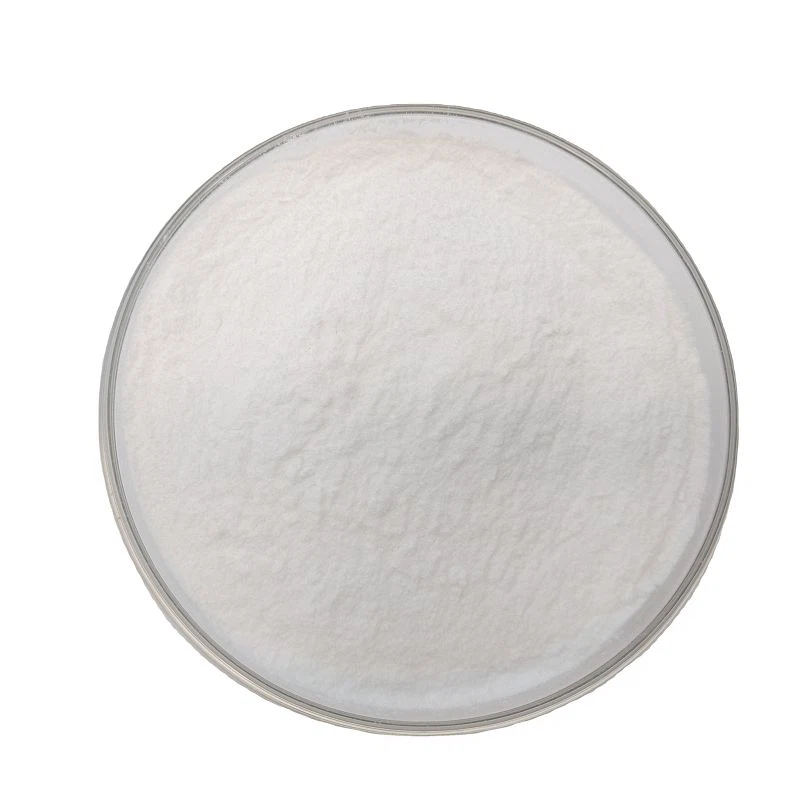
First off, let's talk a bit about sodium dodecyl benzene sulfonate. It's a widely used anionic surfactant with excellent detergency, emulsification, and foaming properties. You can find it in all sorts of products, from household detergents to industrial cleaners. And that's where the particle size distribution comes in handy. It can have a big impact on how the powder behaves in different applications.
What Is Particle Size Distribution?
Particle size distribution is basically a description of the range of particle sizes in a powder sample. It tells you how many particles are small, how many are medium - sized, and how many are large. We usually represent it using a graph or a set of numbers that show the percentage of particles within different size ranges.
For our sodium dodecyl benzene sulfonate powder, getting the right particle size distribution is crucial. If the particles are too large, they might not dissolve properly in water, which can lead to clumping and reduced performance in cleaning products. On the other hand, if the particles are too small, they could be more difficult to handle during the manufacturing process and might also pose a dust inhalation risk.
Measuring the Particle Size Distribution
There are several methods to measure the particle size distribution of our sodium dodecyl benzene sulfonate powder. One common method is laser diffraction. In this technique, a laser beam is passed through a suspension of the powder in a liquid. As the laser light hits the particles, it scatters at different angles depending on the particle size. By analyzing the pattern of scattered light, we can calculate the particle size distribution.
Another method is sieve analysis. This is a more traditional approach where we pass the powder through a series of sieves with different mesh sizes. The powder is separated into different fractions based on whether it can pass through a particular sieve or not. Then, we weigh each fraction to determine the percentage of particles within each size range.
Ideal Particle Size Distribution for Sodium Dodecyl Benzene Sulfonate
So, what's the ideal particle size distribution for our sodium dodecyl benzene sulfonate powder? Well, it really depends on the application. For household detergents, a relatively narrow particle size distribution with most particles in the range of 100 - 500 micrometers is often preferred. This allows for good solubility in water and easy handling during the production of detergent products.
In industrial applications, such as textile processing, the requirements might be a bit different. Penetrant BX is often used in textile processes, and when our sodium dodecyl benzene sulfonate is used in conjunction with it, we might need a particle size distribution that enables better penetration into the fabric fibers. A slightly finer particle size, say in the range of 50 - 200 micrometers, could be more suitable in this case.
Controlling the Particle Size Distribution
At our company, we take great care to control the particle size distribution of our Sodium Dodecyl Benzene Sulfonate powder. We use advanced manufacturing processes and quality control measures to ensure that each batch meets the desired specifications.
During the production process, we can adjust factors like the drying conditions, the rate of crystallization, and the grinding parameters to influence the particle size. After production, we conduct regular quality checks using the measurement methods I mentioned earlier to make sure the particle size distribution is within the acceptable range.
Impact on Product Performance
The particle size distribution of our sodium dodecyl benzene sulfonate powder can have a significant impact on the performance of the final products. In cleaning products, a well - controlled particle size distribution ensures uniform dissolution, which leads to better cleaning power. It also helps in preventing residue buildup on surfaces being cleaned.
In industrial applications, like in the formulation of emulsions, the right particle size distribution can improve the stability of the emulsion. Smaller particles can provide a larger surface area for interaction with other components, which can enhance the emulsifying and dispersing properties of the sodium dodecyl benzene sulfonate.
Why Choose Our Sodium Dodecyl Benzene Sulfonate
As a supplier, we understand the importance of getting the particle size distribution right. We have years of experience in the industry and a team of experts who are constantly working to improve our products. Our sodium dodecyl benzene sulfonate powder is known for its consistent quality and well - controlled particle size distribution.
Whether you're in the business of making household detergents, industrial cleaners, or textile chemicals, our product can meet your needs. We offer different grades of sodium dodecyl benzene sulfonate with tailored particle size distributions to suit various applications.
Let's Talk Business
If you're interested in purchasing sodium dodecyl benzene sulfonate for your business, I'd love to have a chat with you. We can discuss your specific requirements, the ideal particle size distribution for your application, and how our product can fit into your production process. Just reach out to us, and we'll be happy to start the conversation about your procurement needs.
References
- Allen, T. (1997). Particle Size Measurement. Chapman & Hall.
- ISO 13320:2009. Particle size analysis - Laser diffraction methods.