

As a supplier of Dispersant MF, I often get asked about its chemical composition. It's a pretty interesting topic, and I'm excited to share some insights.
Let's start with the basics. Dispersant MF is a type of anionic surfactant. Anionic surfactants are molecules that have a negative charge on one end. This charge gives them some unique properties that make them great at what they do.
The main chemical components of Dispersant MF are based on the condensation product of methylnaphthalene sulfonic acid and formaldehyde. Methylnaphthalene is a polycyclic aromatic hydrocarbon. It's a big word, but basically, it's a molecule made up of multiple rings of carbon atoms. When you add a sulfonic acid group to it, you get methylnaphthalene sulfonic acid.
The sulfonic acid group (-SO₃H) is what gives Dispersant MF its anionic nature. This group can easily lose a proton (H⁺), leaving behind a negatively charged sulfonate group (-SO₃⁻). This negative charge is crucial for its dispersing ability.
Now, the formaldehyde part comes in when we do the condensation reaction. Condensation is a chemical reaction where two or more molecules combine, usually with the loss of a small molecule like water. In this case, the methylnaphthalene sulfonic acid molecules react with formaldehyde to form a larger polymer - like structure.
This polymer - like structure is what makes Dispersant MF so effective as a dispersant. It has a long chain with multiple sulfonate groups along it. When you have a substance that needs to be dispersed, like a pigment or a solid particle in a liquid, the Dispersant MF molecules can surround these particles.
The negative sulfonate groups on the Dispersant MF molecules repel each other. So, when the Dispersant MF is adsorbed on the surface of the particles, it creates a repulsive force between the particles. This prevents the particles from clumping together and settling down, which is exactly what we want in a dispersant.
Another important aspect is the solubility of Dispersant MF. Thanks to the sulfonate groups, it is highly soluble in water. This water - solubility is great because it allows Dispersant MF to be easily incorporated into aqueous systems. And most of the applications where we use dispersants are in water - based systems, like in coatings, inks, and textile processing.
In the textile industry, for example, Dispersant MF plays a vital role. It helps to evenly disperse dyes in the dyeing process. If the dyes are not well - dispersed, you can end up with uneven color on the fabric. With Dispersant MF, you can achieve a more uniform and consistent color. And speaking of the textile industry, we also offer other related products like Dispersing Agent NNO Sodium Salt Of Poly - naphthalene Sulphonic Acid. It's another great dispersant with its own unique properties.
In paper - making, Dispersant MF can be used to disperse fillers like calcium carbonate. This helps to improve the paper's smoothness, opacity, and printability. And in the construction industry, it can be used in concrete admixtures to disperse cement particles. This can improve the workability of the concrete and reduce the water demand.
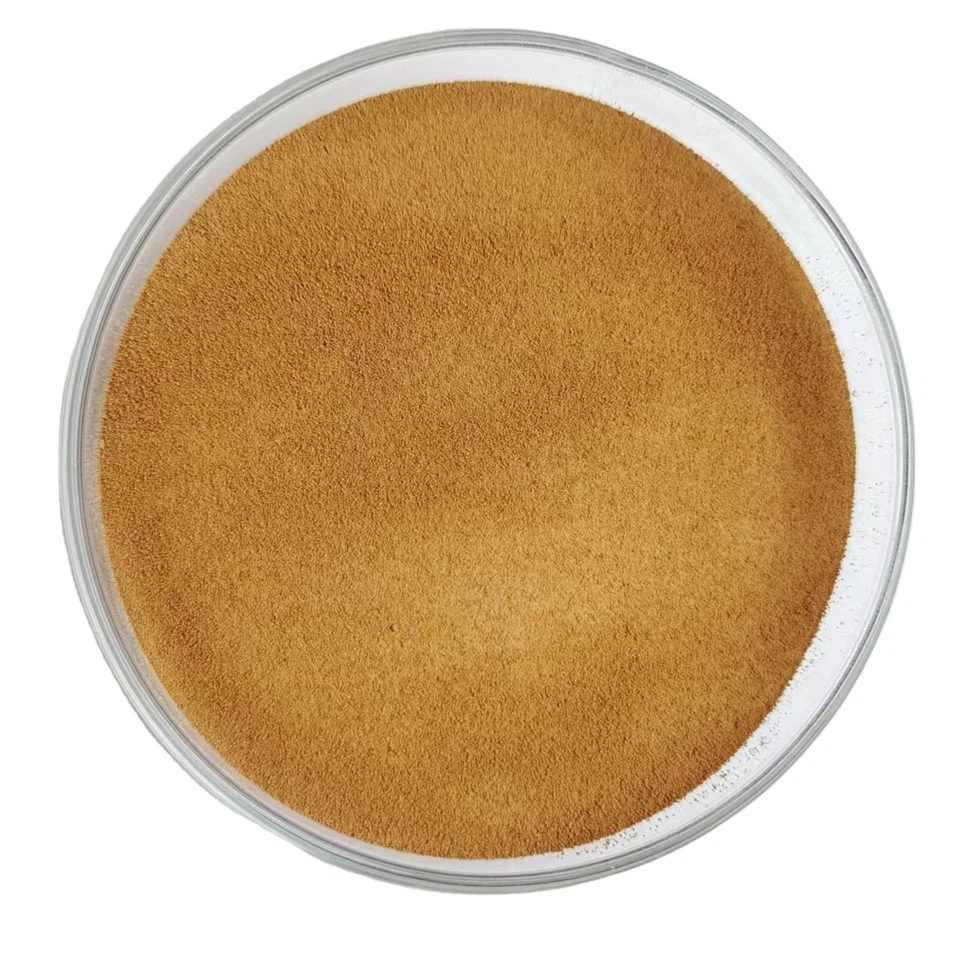

We also have Penetrant BX, which is useful in textile and other industries for its penetration properties. And Sodium Naphthalene Sulfonate Formaldeyde SNSF, which is similar in some ways to Dispersant MF but has its own set of applications and advantages.
If you're in the market for a high - quality dispersant like Dispersant MF or any of our other products, we're here to help. Whether you're in the textile, paper - making, construction, or any other industry that needs good dispersing agents, we can provide you with the right solutions. We've got a lot of experience in the field, and we know how important it is to have reliable products.
So, if you're interested in learning more about our products, or if you want to start a purchase negotiation, don't hesitate to reach out. We're always happy to talk and see how we can meet your specific needs.
References
- "Surfactants and Interfacial Phenomena" by Milton J. Rosen and Dennis L. Kunjappu. This book provides in - depth knowledge about surfactants, including their chemical structures and applications.
- Industry reports on dispersants and related chemicals, which offer real - world insights into the use and performance of products like Dispersant MF.