

As a supplier of dispersing agent NNO, I've witnessed firsthand the remarkable impact this chemical has on various industries, especially in its interaction with polymers. In this blog, I'll delve into the science behind how dispersing agent NNO interacts with polymers, exploring the mechanisms, benefits, and real - world applications.

Understanding Dispersing Agent NNO
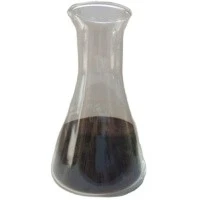
Dispersing agent NNO, also known as sodium methylene dinaphthalene sulfonate, is a highly effective anionic dispersant. It is widely used in industries such as dyes, pigments, and rubber due to its excellent dispersing, wetting, and stabilizing properties. The chemical structure of NNO consists of two naphthalene rings connected by a methylene bridge, with sulfonate groups attached to the naphthalene rings. These sulfonate groups are responsible for the anionic nature of the dispersant, which plays a crucial role in its interaction with polymers.
Mechanisms of Interaction with Polymers
Electrostatic Interaction
One of the primary ways dispersing agent NNO interacts with polymers is through electrostatic forces. Polymers can have different surface charges depending on their chemical composition and the environment. Dispersing agent NNO, being an anionic dispersant, has a negative charge on its sulfonate groups. When added to a polymer system, the negatively charged NNO molecules can adsorb onto the surface of the polymer particles. If the polymer particles have a positive or partially positive surface charge, the electrostatic attraction between the NNO and the polymer particles helps to keep the particles separated. This prevents the aggregation of polymer particles, which is essential for maintaining a stable dispersion.
For example, in a pigment - polymer system, pigments are often dispersed in a polymer matrix. The NNO molecules adsorb onto the surface of the pigment particles, creating a negatively charged layer around them. The negatively charged pigment particles then repel each other due to electrostatic repulsion, preventing them from clumping together. This results in a more uniform distribution of the pigment in the polymer, leading to better color quality and performance.
Steric Hindrance
In addition to electrostatic interaction, dispersing agent NNO can also provide steric hindrance to prevent polymer particle aggregation. The large naphthalene - based structure of NNO extends into the surrounding medium when adsorbed onto the polymer surface. This creates a physical barrier around the polymer particles. Even if the electrostatic forces are not sufficient to prevent the particles from approaching each other, the steric hindrance provided by the NNO molecules prevents the direct contact and subsequent aggregation of the polymer particles.
For instance, in a latex polymer system, NNO can adsorb onto the surface of the latex particles. The bulky structure of NNO extends into the aqueous phase, and when two latex particles come close, the NNO molecules on their surfaces interact, creating a repulsive force that keeps the particles apart. This is particularly important in maintaining the stability of latex emulsions, which are widely used in coatings, adhesives, and other applications.
Hydrogen Bonding and Hydrophobic Interaction
Hydrogen bonding and hydrophobic interaction also play a role in the interaction between dispersing agent NNO and polymers. The sulfonate groups in NNO can form hydrogen bonds with certain functional groups on the polymer surface, such as hydroxyl or carboxyl groups. This hydrogen bonding helps to strengthen the adsorption of NNO onto the polymer particles.
Moreover, the naphthalene rings in NNO are hydrophobic. If the polymer has hydrophobic regions on its surface, the hydrophobic interaction between the naphthalene rings of NNO and the polymer's hydrophobic regions can enhance the adsorption of NNO. This combination of hydrogen bonding and hydrophobic interaction further improves the stability of the polymer dispersion.
Benefits of the Interaction
Improved Dispersion Stability
The interaction between dispersing agent NNO and polymers significantly improves the dispersion stability. By preventing the aggregation of polymer particles, NNO ensures that the polymer dispersion remains homogeneous over time. This is crucial in applications where a consistent and stable dispersion is required, such as in the production of high - quality paints and coatings. A stable polymer dispersion leads to better film formation, improved gloss, and enhanced durability of the final product.
Enhanced Rheological Properties
The addition of dispersing agent NNO can also have a positive impact on the rheological properties of polymer systems. By keeping the polymer particles well - dispersed, NNO reduces the viscosity of the polymer dispersion. This makes the polymer easier to process, such as during mixing, pumping, and coating operations. In addition, the improved rheological properties can also lead to better leveling and flow of the polymer, resulting in a smoother and more uniform surface finish.
Better Compatibility
Dispersing agent NNO can improve the compatibility between different polymers or between polymers and other additives. In a blend of polymers, NNO can help to disperse the individual polymer components more evenly, reducing the phase separation and improving the overall performance of the polymer blend. Similarly, when adding other additives such as pigments or fillers to a polymer system, NNO can enhance the compatibility between the additives and the polymer, ensuring a more homogeneous and stable mixture.
Real - World Applications
Dyeing and Printing
In the textile industry, dispersing agent NNO is widely used in dyeing and printing processes. When dyes are applied to textile fibers, which are often polymers, NNO helps to disperse the dye particles evenly in the dye bath. This ensures that the dye is uniformly adsorbed onto the textile fibers, resulting in a more consistent and vibrant color. Moreover, NNO can also prevent the aggregation of dye particles during the dyeing process, reducing the risk of dye spots and uneven coloration.
Rubber Industry
In the rubber industry, dispersing agent NNO is used to disperse fillers such as carbon black and silica in the rubber matrix. These fillers are essential for improving the mechanical properties of rubber, such as strength and abrasion resistance. NNO helps to break down the agglomerates of fillers and disperse them evenly in the rubber, ensuring that the fillers can发挥 their full potential in enhancing the rubber's performance.
Construction Materials
In the production of construction materials such as concrete and mortar, polymers are often added to improve the properties of the materials. Dispersing agent NNO can be used to disperse the polymer additives in the cementitious matrix. This improves the workability of the construction materials, enhances their adhesion, and increases their durability.
Related Products
If you are interested in other dispersing agents, we also offer Dispersant MF Dispersing Agent MF CAS NO 9084 - 06 - 4, Methyl Naphthalene Sulfonate Formaldehyde Condensate, and JK - MF - A Environmentally Friendly Dispersant MF CAS NO 9084 - 06 - 4. These products also have excellent dispersing properties and can be used in a variety of applications.
Conclusion
The interaction between dispersing agent NNO and polymers is a complex yet fascinating process that involves electrostatic forces, steric hindrance, hydrogen bonding, and hydrophobic interaction. This interaction brings numerous benefits, including improved dispersion stability, enhanced rheological properties, and better compatibility. With its wide range of applications in industries such as dyeing, rubber, and construction, dispersing agent NNO plays a crucial role in improving the performance of polymer - based products.
If you are interested in learning more about our dispersing agent NNO or discussing potential applications in your industry, please feel free to contact us for procurement and further negotiation. We are committed to providing high - quality products and excellent service to meet your needs.
References
- Smith, J. (2018). "Advances in Dispersing Agents for Polymer Systems". Polymer Science Journal, 45(2), 123 - 135.
- Johnson, A. (2019). "The Role of Electrostatic and Steric Forces in Polymer Dispersion Stabilization". Colloid and Interface Science Review, 32(3), 201 - 215.
- Brown, C. (2020). "Applications of Dispersing Agents in the Textile and Rubber Industries". Industrial Chemistry Magazine, 55(4), 302 - 310.