

What is the advantages and problems of dispersant MF?
Dispersant MF is a chemical used to disperse and stabilize substances such as pigments, coatings, and inks. It can disperse these substances into smaller particles, making them easier to be evenly distributed on the desired surface.
The working principle of dispersant MF is to wrap the particles in a molecular layer through the action of surfactants, thereby reducing the interaction forces between particles and preventing particle aggregation. Such surfactants usually include anionic surfactants and nonionic surfactants.
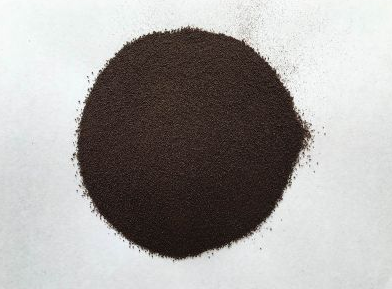
Dispersant MF has a wide range of applications. In coatings and inks, it can improve the dispersibility and stability of pigments, thereby improving their quality and performance. In the plastics and rubber industries, it can improve the dispersibility and stability of fillers, giving products better mechanical properties. In the pesticide and pharmaceutical industries, it can help suspend and disperse active ingredients and enhance their effectiveness.
Although dispersant MF has many advantages, there are also some potential problems that need to be paid attention to. One of the problems is that excessive use of dispersants can lead to over-dispersion of particles, reducing the performance of coatings and products. In addition, the selection of dispersant MF also needs to be adjusted according to different application areas and materials.
In short, dispersant MF is a very important chemical substance with important applications in many industrial fields. Understanding its working principle and application effect plays a very important role in improving product quality and performance.